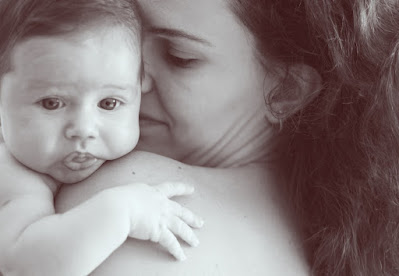
Nursing to Sleep: What we hear vs. what we should hear


Nursing to sleep

What we hear: 

Your baby is using you as a pacifier.
This is going to become a 'bad habit.'
It's wrong.
You're going to be the only one who can put your baby to sleep forever.
Nursing is a negative sleep association. 
This is going to become a sleep crutch.

What we should hear: 

This is biologically normal.
All carry mammals nurse to sleep in infancy.
Countless moms have done this before, and are nursing to sleep right now.
This is calming.
Your oxytocin is flowing well. 
This is beautiful.
This is nourishing. 
Nursing to sleep will fade away on its own when the time is right for my baby. 
This builds trust. 
Nursing to sleep encourages a hearty supply.
Sleep hormones from nursing to sleep allow my baby to fall asleep naturally. 
This will not last forever and be over before I know it... 


*******

Are you treating your child like a prisoner?

By Darcia F. Narvaez Ph.D. 


Did you know that putting people in solitary confinement is the worst punishment we can mete out (and the USA puts more of its citizens in solitary confinement than any country in history)?

)? Spend much alone and you can become mad. The psyche breaks down.

Why is this? Thomas Lewis and colleagues point out that mammals, like us, need others to regulate our brains and bodies. We need others to feel right.  This is especially true for young children.

Remember Rene Spitz? He showed that young children left in hospitals for months on their own (except for food and diaper change) failed to thrive (he called it “hospitalism”). The children’s relationships with their parents were permanently impaired and the brain damage was done. You can see some disturbing film here.

No surprise, isolation leads to craziness in adults and physiological breakdown in kids. Not so sure?

Here is some evidence about what happens when a young offspring loses touch with a caregiver.

  • In babies, maternal touch regulates temperature and well being. For example, Luddington and colleagues (Ludington, 1980; Ludington-Hoe, Hadeed, & Anderson, 1991) have shown that a mother’s body temperature will automatically rise in skin-to-skin contact with an infant whose temperature is too low, going back to normal once the baby’s temperature is at a normal level.
  • When rat pups are taken away from their mothers for even a brief time, their physiological state changes to a ‘survival mode’ (summarized by Schanberg, 1995) which includes decrease in factors related to growth such as growth hormone release and DNA synthesis. Maternal touch stimulates normal growth through the mediation of Beta-endorphin.  All sorts of physiological functions break down and can become dangerously chaotic (respiratory, cardiac, endocrine, digestive, etc.). SIDS is a risk factor for babies who sleep alone (see this).
  • Schanberg and colleagues (Evoniuk, Kuhn, & Schanberg, 1979; Pauk, Kuhn, Field, & Shanberg, 1986) found that deep touch is important for growth (which they have mimicked with paint brushes) not movement, like rocking in a swing (although that is good too).

So there is a lot of data about the importance of touch, but what does that have to do with how parents might be treating babies like prisoners? Using playpens? Yes. Using carriers outside the car? Yes.

But mostly because they leave them alone at night. This is solitary confinement for babies. And can be destructive to the child’s developing brain.

Humans are the only mammals that separate their young from the mother. Not a good idea when you are born with only 25% of your brain and many miles of growing to go before you can adequately sleep on your own.  Americans are one of the few societies that have separate bedrooms for a child. It is considered cruel by many other cultures.

Depriving your child of you is like depriving them of love. It makes them ill.  It probably makes you ill too. Why cause all that illness? Sleep together in safe ways.

Atul Gawande, who wrote about prisoner solitary confinement, calls it torture. I think I agree with him. How can we do that to our children?


Peaceful Parenting Community 

CoSleeping Community


Related Reading by Dr. Narvaez at Peaceful Parenting: 

An 'On Demand' Life and the Basic Needs of Babies

Where Are All the Happy Babies?

The Dangers of Crying It Out

10 Things Everyone Should Know About Babies

5 Things NOT to Do to Babies

12 Ways to Nurture Babies at Conception, Birth, and Beyond

Are you treating your child like a prisoner?

Are you or your child on a touch starvation diet?

Conspiracy Thinking: Understanding Attachment and Its Consequences

Psychology Today: Circumcision Series

Learn More from Narvaez:

The Evolved Nest Institute

Kindred Media

Neurobiology and the Development of Human Morality: Evolution, Culture, and Wisdom

💜 Peaceful Parenting Community

💙 Peaceful Parenting on Facebook

💗 Peaceful Parenting on Telegram

Nawal El Saadawi, Doctor and Warrior Who Devoted Her Life to Ending FGM and MGM, Passed Away at Age 89

"Male circumcision is a problem too. I am against that as well, as a doctor." -Nawal El Saadawi
"Male circumcision is a problem too. I am against that as well, as a doctor." -Nawal El Saadawi 

Nawal El Saadawi, who has been a lifetime warrior to end FGM, passed away today at age 89. Eleven years ago she specifically addressed the topic of ending MGM as well in an interview (below), and repeatedly through her life's work, she expressed that she wholeheartedly believed that the genital cutting of all children was equally as horrific, dangerous, and in need of being stopped. Nawal was a champion for the genital autonomy and protection of all babies and children, regardless of sex or age. 

Related Reading:  

The CUT (FGM Brief Documentary)

FGM Bill of the United States


Homologous Organs: The Clitoris and the Penis

Intact: Healthy, Happy, Whole community learning group

Peaceful Parenting Community

Nawal was a champion for the genital autonomy and protection of all babies and children, regardless of sex or age.

News Excerpts


Egypt’s trailblazing writer Nawal El Saadawi died on Sunday at the age of 89, after a lifetime spent fighting for women’s rights and equality. The feminist author of more than 55 books first spotlighted the issue of female genital mutilation (FGM) with The Hidden Face of Eve in 1980. 

A trained doctor, El Saadawi also campaigned against women wearing the veil, polygamy and inequality in Islamic inheritance rights between men and women. She died in a Cairo hospital after a long battle against illness. 

Born in October 1931 in a village in the Nile delta, north of Cairo, El Saadawi studied medicine at Cairo University and New York’s Columbia University. The novelist, who wrote regularly for Egyptian newspapers, also worked as a psychiatrist and university lecturer. One of the leading feminists of her generation, El Saadawi’s 1972 book Women and Sex unleashed a backlash of criticism and condemnation from Egypt’s political and religious establishment, resulting in the activist losing her job at the health ministry. 

She was jailed for two months in 1981 by the late president Anwar Sadat during a wide political crackdown in which several intellectuals were detained. While imprisoned, El Saadawi wrote about her experience in Memoirs from the Women’s Prison, writing on a roll of toilet paper using an eyebrow pencil smuggled in by a fellow prisoner. The writer became a target of Islamist militants, with her name on death lists that included Egyptian Nobel literature laureate Naguib Mahfouz, who in 1994 was stabbed in an attempt on his life. “This refusal to criticise religion … This is not liberalism. This is censorship,” she said. 

Speaking to the Guardian in 2009, she said: “I regret none of my 47 books. If I started my life again I would write the same books. They are all very relevant even today: the issues of gender, class, colonialism (although of course that was British and is now American), female genital mutilation, male genital mutilation, capitalism, sexual rape and economic rape.” 

After undergoing female genital mutilation at the age of six, and seeing the damage it could do during her work as a village doctor, she campaigned against the practice. “Since I was a child that deep wound left in my body has never healed,” she wrote in an autobiography. 

El Saadawi also established and led the Arab Women’s Solidarity Association, as well as co-founding the Arab Association for Human Rights. El Saadawi moved to North Carolina’s Duke University in 1993 due to death threats. After returning to Egypt, she ran for president in 2005 but abandoned her campaign after accusing security forces of not allowing her to hold rallies. In 2007, she was condemned by Egypt’s highest Sunni Muslim authority, Al-Azhar, for her play God Resigns at the Summit Meeting – in which God is questioned by Jewish, Muslim and Christian prophets and finally quits. Her views resulted in her facing several legal challenges, including allegations of apostasy from Islamists. 

Despite challenges from authorities, the writer said in 2010 that she was motivated to keep going by the daily letters she received from people who say their lives have been changed by her writing. “A young man came to me in Cairo with his new bride. He said, I want to introduce my wife to you and thank you. Your books have made me a better man. Because of them I wanted to marry not a slave, but a free woman.” 

In 2005, El Saadawi was awarded the Inana International Prize in Belgium, a year after she received the North-South prize from the Council of Europe. In 2020, Time Magazine named her on their 100 Women of the Year list. Egypt’s culture minister, Inas Abdel-Dayem, mourned El Saadawi’s passing, saying her writings had given rise to a great intellectual movement. 

El Saadawi married three times, and is survived by a daughter and a son.


The Global Dispatches (2010 Interview): http://www.theglobaldispatches.com/articles/nawal-al-saadawi

What are you working on at the moment? 

I write an article every Tuesday for an independent daily in Cairo called Al Masry Al Youm, it is an opposition paper. I also wrote a novel while I was in Atlanta in Georgia, called “My life across the Ocean”. This is about my experiences in America and should be published in Arabic towards the end of this year. I am also starting a new novel which is working away in my brain! Last year I published a book entitled “Zeina” which is already being widely translated. 

I have heard that your grandmother had a strong influence on your life, is this true? 

It is true. My grandmother was a strong influence on my life, she was the mother of my father, a peasant woman with a strong personality. She had very strong ideas about life, religion, God and colonialism. She used to tell me that God is justice, he is not a text or a book. My grandmother was illiterate but she knew that God was justice. She took on everyone, the Mayor, King Farouk. She was a great influence on me. She had a very strong character. 

You have recently been living in the United States 

In 1993, I went to Duke University to teach. This was because my life was threatened and my house in Cairo had been surrounded by security guards. I had been put on a death list and the Muslim fundamentalists in Egypt (and elsewhere) had vowed to kill me. So I became a professor at Duke University. When I went to the South of the United States I did not realize that this was the Bible Belt, the “fundamentalist” area of America. The Southern fundamentalists are even more fanatical than the Muslim fundamentalists! They are very right wing, pro-Israel, they adore the Republicans, and they are very reactionary. They use Christianity for political ends too. I wrote the play “God resigns at the Summit Meeting” while I was teaching at Duke University in the USA. I wrote it in Arabic but nobody wanted to publish it, and then my publisher in Cairo took it because he was publishing my collected works for an international book fair so he published everything including “God Resigns” but he did not know what he was publishing because he was illiterate. My publisher burnt the manuscript because he received a visit from the police who told him to destroy it. They also threatened to destroy his publishing house if he went ahead with publication. My publisher died soon afterwards as he lost a lot of money in this affair and it destroyed him. It was very sad. 

The authorities have tried to isolate and censor you before have they not? 

Oh yes! I wrote my book “Women and Sex” in the 50s but I could not find anyone to publish the book until the 60s, but it was banned in Egypt so I had to publish it in Lebanon in 1970. As a result of publishing this book and some other articles, I lost my job at the Ministry of Health. At the time I had also set up a magazine called “Health” which I edited and the Minister of Health closed this magazine as I was dealing with issues like female circumcision, women’s problems and the issue of virginity. 

Do you see yourself as a doctor, an author, or a feminist, or all of the above? 

The unifying force in all my work is a mixture of feminism and a strong sense of social justice – a mixture of many things. I am a doctor but I do not separate medicine from politics and economics, they are all connected. I do not separate poverty from sickness, or mental illnesses from physical illnesses. Poverty, politics and neo-colonialism cannot be separated either. Patriarchal systems, multinationals and the oppression of women are all inter-connected too. I teach that they are all connected. I teach creativity and dissidence. Dissidence itself is a creative act. When a law is unjust you have to break it. For this reason I see feminism as humanism. 

Is Female Genital Mutilation still an issue in Egypt? 

It certainly is! Female genital mutilation is still a serious problem in Egypt, despite the fact that a law was passed to ban this practice, the number of circumcisions has not decreased. The rate of circumcisions amongst young girls is 97%. The government is not serious about banning this practice, nor is the media, they don’t care about the health of young women or girls. It is a corrupt government – they don’t care. They only passed the law to avoid a scandal after a film was shown of a young girl being circumcised and bleeding to death. They are not serious about it. I am still censored on Egyptian television when I speak about this issue in Egypt. Male circumcision is a problem too, I am against that as well, as a doctor. There has been no progress on this front. 

How do you explain the decline in interest in feminism worldwide? 

There are differences between feminism in Muslim countries and feminism in Western countries. Western feminists are more concerned with class, race and gender oppression but they have a different outlook for one important reason: they were never colonized. They do not link feminism to colonialism. There has been a backlash against feminism over recent years as a result of the rise of right-wing politics. There is a direct connection. The defeat of socialism is also responsible but so is the connection between right-wing groups and religious fundamentalists. 

Certain countries in Europe are trying to legislate against the burqa and the use of the veil in public places. How do you feel about that? 

I agree the veil should be banned. And there should be no religious separation in schools. There should be no veils and no nakedness either. The veiling and the nakedness of women are two sides of the same coin. It is the same oppression at work. When I see naked bodies of women being used for advertisements and to make profit I am horrified. They try and sell make-up to women who are poor. I disagree with this. Men are always fully clothed and go unveiled, Why?! 

There have been some recent political developments in Egypt with the extension of the state of emergency for another two years. 

This is something I am against, clearly, as I am part of the opposition. We need democracy, we do not need emergency laws – we are not living in a state of emergency. The government uses these laws to protect itself. There is a great deal of corruption in the government so they need these laws to protect themselves. These laws are dangerous and anti-democratic. 

How do the younger generation in Egypt react to your work? 

It depends on who they are. If a woman is veiled she will see me differently but I judge my popularity through my books. I sell a lot of books throughout the Middle East and the Muslim world. I have had 47 books republished and I have a lot of readers, so that is why I feel secure. The government and the fundamentalists want to isolate me and neo-colonial powers in the USA are against me, but the people who support me are the huge number of my readers throughout the world. I have been translated into 30 languages. My readers protect me!
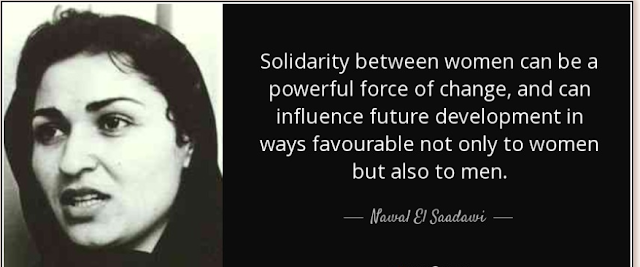
Nawal El Saadawi believed male circumcision was equally as wrong as female circumcision, and that coming together in solidarity for the genital autonomy of ALL would benefit both women and men across the board.

Archived Biography of Nawal El Saadawi

Nawal El Saadawi is a world renowned writer. She is a novelist, a psychiatrist, and author of more than forty books of fiction and non fiction. Her novels and her books on the situation of women have had a deep effect on successive generations of young women and men over the last five decades. 

As a result of her literary and scientific writings she has had to face numerous difficulties and even dangers in her life. In 1972, she lost her job in the Egyptian Ministry of Health because of her book “Women and Sex” published in Arabic in Cairo (1969) and banned by the political and religious authorities, because in some chapters of the book in which she wrote against Female Genital Mutilation (FGM) and linked sexual problems to political and economic oppression. The magazine Health, which she founded and had edited for more than three years, was closed down in 1973. In September 1981 President Sadat put her in prison. She was released at the end of November 1981, two months after his assassination. She wrote her book “Memoirs” from the Women’s Prison on a roll of toilet paper and an eyebrow pencil smuggled to her cell by an imprisoned young woman in the prostitutes ward. From 1988 to 1993 her name figured on death lists issued by fanatical religious political organizations. 

On 15 June, 1991, the government issued a decree which closed down the Arab Women’s Solidarity Association over which she presides and handed over its funds to the association called Women in Islam. Six months before this decree the government closed down the magazine Noon, published by the Arab Women’s Solidarity Association. She was editor-in-chief of the magazine. 

During the summer of 2001, three of her books were banned at Cairo International Book Fair. She was accused of apostasy in 2002 by a fundamentalist lawyer who raised a court case against her to be forcibly divorced from her husband, Dr. Sherif Hetata. She won the case due to Egyptian, Arab and international solidarity. On 28 January, 2007, Nawal El Saadawi and her daughter Mona Helmy, a poet and writer, were accused of apostasy and interrogated by the General Prosecutor in Cairo because of their writings to honor the name of the mother. 

They won the case in 2008. Their efforts led to a new law of the child in Egypt in 2008, giving children born outside marriage the right to carry the name of the mother. Also FGM is banned in Egypt by this law in 2008. Nawal El Saadawi was writing and fighting against FGM for more than fifty years. Her play “God Resigns At the Summit Meeting” was banned in Egypt during November 2006 and she faced a new trial in Cairo court raised against her by Al Azhar in February 2007, accusing her of apostasy and heresy because of her new play. She won the case on 13 May 2008. 

Nawal El Saadawi had been awarded several national and international literary prizes, lectured in many universities, and participated in many international and national conferences.

All babies are born perfect. Say NO to circumcision


Parenting in Peace

By Daisy L. Hall
Contact Hall at: DaisyHall@choosepeace.com


I urge you to be at peace with your children. Many parents are at 'war' with their children - constantly fighting over homework, chores, curfew, etc. Such households are characterized by frustrated, yelling parents; and fearful, crying, unhappy children. If you find a need to chastise or punish your children on a daily basis, there is a need for change. Isn't it time to end the conflict? Make a commitment to peaceful parenting and a peaceful household by embracing the concepts outlined here.

To parent in peace:

1. Give some thought to your childhood. Think about what you liked and did not like about your growing up experience. Think about your childhood relationship with your parents.

Why is this important? Because parents will inevitably relive their childhoods through their children. And, whatever unresolved issues you have from childhood, will show up, one way or another, in your relationship with your children - often in very unhealthy ways.

What issues have you carried into adulthood? Do you have unresolved issues with your parents? Do you have issues around control, sexuality, school performance, anger , trust or intimacy? If so, think about how these issues may be affecting your ability to be a good parent. See my article, Do Your Own Therapy.


2. Think about the problems you are having with your children. For each problem, ask yourself, is this really important? Why does this bother me so much? If the child does not change this behavior, will there be serious consequences? Sometimes a problem becomes a power struggle that the parent is unnecessarily determined to win. But, what value is winning if you destroy your relationship with your child? Ongoing conflict carries with it the risk of seriously damaging the parent-child relationship. And with ongoing conflict, there can be no peace.

3. Accept your child as a separate, unique individual, who at times may think and behave very differently from you. Too often parents are threatened by, or uncomfortable with, differences. Conflicts arise when the parent tries to change the way a child thinks or behaves. Ask yourself, "Is this really a problem I should be concerned about?" Or, is it simply the child expressing his or her unique personality?

For example, you feel your child is much too outgoing and constantly warn him to be more cautious about people, not to be so friendly. After you have adequately expressed your concerns, it may be time to let go and accept the child for who he is. Recognizing that we all learn by experience.

4. Think about the expectations you have of your children. Are they realistic? Are they fair? Children are often held to higher expectations than adults - i.e. "You must always tell the truth," when lying by adults is often excepted or overlooked. Children are often punished for breaking a glass, spilling the milk, or losing his jacket; when adults are not. Children are frequently punished for getting a bad grade, but adults are not punished for getting a bad performance evaluation. In regards to school work, the issue should be, whether or not the child did the best he or she could.

5. Respect your children. Just as adults want and need respect, so do children. Respect your children by listening to them, accepting their individuality, accepting that they are not perfect, allowing them to make mistakes, and allowing them to make decisions and have input about things that affect them (as age appropriate). And remember, if you must demand a child's respect, you don't really have it.


6. Contemplate your concept of a "good child." Is a good child one that always does what he or she is told? Never disobeys? Always does the right thing? Always pleases his parents? Think about it. Would you really want a child like that? And how prepared would such a child be to function in our society? Sometimes "disobedience" can be a sign or strength or independence. If parenting was a simple as telling a child once, parents would not be needed. A child needs to be taught, and teaching and training takes time and repetition. If you have to correct your child many times for the same misbehavior, this does not necessarily mean the child is bad or disrespectful. A child is a work in progress, who will need support and guidance for many years.

And remember, there are no perfect children, as there are no perfect parents. You must forgive yourself for the mistakes you make as a parent, and you must forgive your children. A parent will often be required to forgive a child for not being born at the right time, for not being the child you wanted, for not living up to your expectations, for not fulfilling your dreams, and for making mistakes.

7. Have fun together, as a family. Create your own family traditions. Such as, pizza night or movie night once a week. Make cookies, popcorn, or other treats. Work a puzzle, play a board game, read stories together. Sit down with the children and come up with fun things you can do on your "fun night." Children need to have fun and so do you. I recognize that this can be difficult with our busy lives, however, investing time in your children reaps great rewards.

8. Be a loving parent and do the very best you can. This is the best advice anyone can give a parent. If you are doing the very best you can, there is never any reason for guilt. Most parents "love" their children, but "loving" is about how you treat your children. Be loving with your children. Praise them specifically, give them attention when they're doing things right, show them respect as human beings, and tell them you love them - often.

And, if you are getting it right, you will know. Within your household, there will be smiles, there will be laughter, and there will be peace.


Cry It Out: What is the 'It'?

What is the 'it' in cry-it-out?

When we give babies no choice but to 'cry it out' we need to ask ourselves, what is the 'it'?

The 'it' is safety.
The 'it' is connection.
The 'it' is us - their parents.
They are crying for us.

-Tracy Gillett 

Sleep training: a review of research: http://www.DrMomma.org/2009/12/sleep-training-review-of-research.html 

Healthy baby sleep resources: http://www.DrMomma.org/2009/06/truth-about-co-sleeping-how-stats.html

Love Matters!

By Danelle Day © 2018


It is difficult to have an unbroken civilization when we begin breaking children at birth... when we lack compassion, empathy, and *involvement* in loving babies and children (responding readily to their cues and needs), supporting mothering (or gentle/conscious parenting in general). When we raise detached, isolated, anxious, lonely babies/children into detached, isolated, anxious, lonely adults, what do we expect to happen along the way?

Peacefully parenting all little ones (no matter their sex) from the very beginning can powerfully and positively break this destructive cycle that has become ubiquitous in the United States and is overflowing now with its disarray.

A gently parented child who has been loved intensely, and responded to without fail, who has been tuned-into, heard, and shown compassion, by a well-supported parent, from birth onward does not grow to kill.

#LoveMatters

Pick up your baby. Respond to their cues. Hold them. Wear them. Rock them. Keep them intact. Keep them close. Snuggle down at night safely beside them. Show them that they can trust you, and trust this world around them. Show them what love feels like, so they won’t need to doubt that it exists. This time is short and fleeting, but impacts a *lifetime* to come.

If there are just two books that would do the world good for everyone to read, and put into practice, it would be these:

[and the many reasons that genital cutting at birth, neglect, leaving a baby to cry alone, not responding to cues, and general lack of affection forever hurts a baby, child, and adult]

[how gentle, conscious parenting of babies and children can break cycles of destruction and lead to healthy, happy adults of tomorrow]

Related Reading: 

Where are all the happy babies?
DrMomma.org/2011/09/where-are-all-happy-babies.html

Dr. David Chamberlain on Smiling Babies and Civilization
DrMomma.org/2013/02/dr-david-chamberlain-on-smiling-babies.html

Babies Know More Than You Think:
http://ttfuture.org/files/2/members/int_chamberlain.pdf

Peaceful Parenting: Giving Babies the Best Start in Life
DrMomma.org/2011/06/primal-parenting-giving-babies-best.html

Cosleeping and Biological Imperatives: Why Human Babies Do Not and Should Not Sleep Alone
DrMomma.org/2009/10/cosleeping-and-biological-imperatives.html

Primal Love and Mothering
DrMomma.org/2009/12/primal-love-mothering.html

Loveness in the Brokenness
DrMomma.org/2018/01/loveness-in-brokenness.html

Windows to the Womb: Revealing the Conscious Baby from Conception to Birth
http://amzn.to/2EAdC2h

Primal Health: Understanding the Critical Period Between Conception and the First Birthday
http://amzn.to/2F9SnRO

The Scientification of Love
http://amzn.to/2Ez43Rc

Peaceful Parenting Group
FB.com/groups/ExplorePeacefulParenting

Gentle Parenting Discussion Groups by Topic
DrMomma.org/2007/12/discussion-groups.html

Dr. David Chamberlain on Smiling Babies


Human Milk Changes with COVID Antibodies for Sake of Baby

Human milk is always changing - day to day, week to week, to match a baby's specific developmental and immunity needs at any given time. When mom or baby has a virus, milk is super charged with antibodies to support the immune system in doing its job. This is one of many reasons continuing to breastfeed through an illness is ideal. Nothing is more healing (or preventative) than mom's milk, and is irreplaceable for a baby facing sickness.

In fact, when a nursing mother pumps while her body is amping up antibodies, she can often literally see the difference in her milk. Because human milk is made from mother's blood, when she or her baby is ill, mom's body creates antibodies to fight the illness. These pass through her milk to help baby fight things -- causing a change in milk shade, color, or composition. 

One mother, Anna, shared this photo of how her milk changed in color within the days following a positive COVID test, when she and her baby were both ill. Her milk was packed with the goodness her baby needed to recover as rapidly as possible, and to not become as ill as may otherwise occur.


Related Reading:

If you nurse your baby (for any amount of time)

How natural weaning happens:

Human milk kick-starts baby's immune system

Human Milk Proteins Inhibit Bacteria M. Luteus - Breastfeeding Benefits for Toddlers, Too!

HAMLET Substance in Human Milk Kills Cancer Cells

Baby Matters: What Your Doctor May Not Tell You About Caring for Your Baby

Take Charge of Your Child's Health

*******


Physicians Urge Public Health Distribution of Vitamin D3

By Danelle Day, Healing Hubby

Unless you're supplementing with a quality D3 or spending the majority of your days sunbathing naked near the equator, your body is in need of D. 🌞

Signed by numerous doctors - encouraging those in public health sectors to widely distribute and encourage the use of D3 supplementation - this letter (excerpt below) is worth reading: https://vitamindforall.org/letter.html The letter's focus is on COVID-19 prevention and treatment, but D3 is an important part of many aspects of human health and healing. When my husband was first diagnosed with stage 3 cancer, his blood D levels were at 8. When I began experiencing extreme consequences of autoimmune/adrenal/thyroid issues (Hashimoto's / PCOS / Cold Urticaria / allergic reactions / early onset arthritis, etc.) my blood D levels were at 18. Even living on the beach, outside all. the. time. in an area that doesn't ever get "real winters" and is sunny most days of the year, our eldest child was also D deficient when tested. We now all take 10-15,000 IU of a quality D3 most days of the week (and us adults have bloodwork done every 3-6 months). Better Way Health has the best we've found (this link will get you 15% off an order, or they are also discounted further if you purchase 12 at a time: https://prz.io/GQ9K32Sm). Prior to making a switch to this D3, we had tried others without much success in raising blood levels, including prescription D2 that was ordered by my husband's physician. We eat a lot of green leafy vegetables (abundant in K) but if those aren't part of your regular diet, taking a quality K2 is also a good idea to go along with D3. (Thorne is our favorite for this - https://amzn.to/2KZDbOg but there are many quality brands you can rotate between). The Better Way Health D3 (pictured above) is super small and easy for anyone to swallow; however our youngest child still takes D3 in drop form instead (Thorne's D3/K2 combo is our favorite for kids who can't do capsules of any size yet - https://amzn.to/3psT9iU). Regardless of what D3 you opt for, it is *inexpensive* and incredibly worth adding into your regimen. Getting a blood test to know where you are starting is a good idea also - it is very simple to ask your physician to add D onto your next bloodwork, OR you can get a quick D test done at almost any lab without a doctor's lab order. If you've never supplemented before, you are likely very low, and would benefit by starting with 10-20,000 IUs daily for a few months. However, even for those who aren't going to get bloodwork done, and are NOT deficient to begin with, 5,000IUs daily is a very good idea for your wellbeing. 🌞🌞🌞🌞🌞🌞 LETTER QUOTE: To all governments, public health officials, doctors, and healthcare workers, Research shows low vitamin D levels almost certainly promote COVID-19 infections, hospitalizations, and deaths. Given its safety, we call for immediate widespread increased vitamin D intakes. Vitamin D modulates thousands of genes and many aspects of immune function, both innate and adaptive. The scientific evidence1 shows that: Higher vitamin D blood levels are associated with lower rates of SARS-CoV-2 infection. Higher D levels are associated with lower risk of a severe case (hospitalization, ICU, or death). Intervention studies (including RCTs) indicate that vitamin D can be a very effective treatment. Many papers reveal several biological mechanisms by which vitamin D influences COVID-19. Causal inference modelling, Hill’s criteria, the intervention studies & the biological mechanisms indicate that vitamin D’s influence on COVID-19 is very likely causal, not just correlation. Vitamin D is well known to be essential, but most people do not get enough. Two common definitions of inadequacy are deficiency < 20ng/ml (50nmol/L), the target of most governmental organizations, and insufficiency < 30ng/ml (75nmol/L), the target of several medical societies & experts.2 Too many people have levels below these targets. Rates of vitamin D deficiency <20ng/ml exceed 33% of the population in most of the world, and most estimates of insufficiency <30ng/ml are well over 50% (but much higher in many countries).3 Rates are even higher in winter, and several groups have notably worse deficiency: the overweight, those with dark skin (especially far from the equator), and care home residents. These same groups face increased COVID-19 risk. It has been shown that 3875 IU (97mcg) daily is required for 97.5% of people to reach 20ng/ml, and 6200 IU (155mcg) for 30ng/ml,4 intakes far above all national guidelines. Unfortunately, the report that set the US RDA included an admitted statistical error in which required intake was calculated to be ~10x too low.4 Numerous calls in the academic literature to raise official recommended intakes had not yet resulted in increases by the time SARS-CoV-2 arrived. Now, many papers indicate that vitamin D affects COVID-19 more strongly than most other health conditions, with increased risk at levels < 30ng/ml (75nmol/L) and severely greater risk < 20ng/ml (50nmol/L).1 Evidence to date suggests the possibility that the COVID-19 pandemic sustains itself in large part through infection of those with low vitamin D, and that deaths are concentrated largely in those with deficiency. The mere possibility that this is so should compel urgent gathering of more vitamin D data. Even without more data, the preponderance of evidence indicates that increased vitamin D would help reduce infections, hospitalizations, ICU admissions, & deaths. Decades of safety data show that vitamin D has very low risk: Toxicity would be extremely rare with the recommendations here. The risk of insufficient levels far outweighs any risk from levels that seem to provide most of the protection against COVID-19, and this is notably different from drugs & vaccines. Vitamin D is much safer than steroids, such as dexamethasone, the most widely accepted treatment to have also demonstrated a large COVID-19 benefit. Vitamin D’s safety is more like that of face masks. There is no need to wait for further clinical trials to increase use of something so safe, especially when remedying high rates of deficiency/insufficiency should already be a priority. Therefore, we call on all governments, doctors, and healthcare workers worldwide to immediately recommend and implement efforts appropriate to their adult populations to increase vitamin D, at least until the end of the pandemic. Specifically to: Recommend amounts from all sources sufficient to achieve 25(OH)D serum levels over 30ng/ml (75nmol/L), a widely endorsed minimum with evidence of reduced COVID-19 risk. Recommend to adults vitamin D intake of 4000 IU (100mcg) daily (or at least 2000 IU) in the absence of testing. 4000 IU is widely regarded as safe.5 Recommend that adults at increased risk of deficiency due to excess weight, dark skin, or living in care homes may need higher intakes (eg, 2x). Testing can help to avoid levels too low or high. Recommend that adults not already receiving the above amounts get 10,000 IU (250mcg) daily for 2-3 weeks (or until achieving 30ng/ml if testing), followed by the daily amount above. This practice is widely regarded as safe. The body can synthesize more than this from sunlight under the right conditions (e.g., a summer day at the beach). Also, the NAM (US) and EFSA (Europe) both label this a “No Observed Adverse Effect Level” even as a daily maintenance intake. Measure 25(OH)D levels of all hospitalized COVID-19 patients & treat w/ calcifediol or D3, to at least remedy insufficiency <30ng/ml (75nmol/L), possibly with a protocol along the lines of Castillo et al ‘20 or Rastogi et al '20, until evidence supports a better protocol. Many factors are known to predispose individuals to higher risk from exposure to SARS-CoV-2, such as age, being male, comorbidities, etc., but inadequate vitamin D is by far the most easily and quickly modifiable risk factor with abundant evidence to support a large effect. Vitamin D is inexpensive and has negligible risk compared to the considerable risk of COVID-19. Please Act Immediately


View research cited and physicians who have signed this letter at: https://vitamindforall.org/letter.html


The Role of Sound Healing in Postpartum Recovery

The postpartum experience is different for every mother. For some, recovery is relatively quick and simple. But for most, there are lingering physical and mental symptoms that must be addressed in order to continue moving forward. 


Could something called “sound healing” be the key to your recovery?


What is Sound Healing?


When it comes to our five senses, sound may be one of the more underrated of the bunch. While we’re acutely aware of sight (roughly 90 percent of the information transmitted to the brain is visual), smells, tastes, and even touch, sound isn’t always giving the same level of perceptivity that it deserves. But truth to be told, it’s an extremely important sense that many believe has the power to heal.


“Sound healing is an ancient meditative practice that uses different musical implements to create healing vibrations around the body in a meditative state,” Wellset explains. “Singing Bowl Therapists, for example, use Quartz crystal bowls and Gongs tuned at strategic frequencies for healing different parts of the body and mind.”


Sound healing can be traced all the way back to ancient cultures. In ancient Greece, for example, music was regularly used in an attempt to cure people from mental disorders and illnesses. In 12th century Tibet, sound therapy was used as part of meditation and rituals to calm people and establish a sense of mindfulness. And throughout much of history, music and other sounds have been utilized to boost morale in military companies, ward off evil spirits, and even increase productivity in businesses.


Different people have their own opinions on why and how sound therapy works. One theory is that sounds shift frequencies from low energy feelings and experiences (like fear and guilt) to much higher vibrations of joy, love, and peace. In doing so, it releases “energetic blockages,” which induces harmony in the body.


Regardless of the specifics, all sound therapists agree that the power of sound to heal lies in its vibrations. Since the adult body is roughly 75 percent water – which is a great conductor for sound vibrations – sound is able to produce some pretty profound effects. As these vibrations move throughout different areas of the body, they encourage energy flow and facilitate circulation. This experience activates “destress” responses in the body, which melt tension and promote a sense of balance.


While every person responds differently, sound healing is known to yield benefits like lower stress, lower blood pressure, and improved sleep. As such, it’s the perfect option for women going through postpartum recovery.


When used as part of a postpartum recovery plan, sound therapy can help stimulate the mind and body in ways that are difficult to reach with other therapeutic techniques like acupuncture. It dissolves worry and fear, while helping exhausted mothers get the restorative sleep they need. In other words, it gives new mothers the energy and balance they need to be there for their newborns.


Common Sound Healing Techniques


Sound healing comes in all different methods and packages. Some mothers resonate with one technique more than another. Having said that, here are a few to consider:


  • Tuning Fork Therapy. This form of therapy utilizes carefully calibrated metal tuning forks that can be used in the energetic field around the body, on either side of the head, on the chakras, or even on reflex points on the bottom of the feet. These tuning forks emit feeling frequencies that naturally encourage the body to entrain and develop resonance with that vibration. Because nature is very efficient, all it takes is very small frequency vibrations to specific areas of the body and it can be effortlessly eased from one state to the other.


  • Binaural Beats. This method uses two tones played in each ear. The tones are slightly different, yet so similar that the listener perceives them as being the same. Varying hertz levels can be utilized for different purposes. Lower binaural beats are used for the purposes of relaxation, sleep, and meditation. Higher-level beats are ideal for increasing attention and focus. The best part is, binaural beats can be played in the comfort of your own home. Just grab a pair of headphones and try a quick 30-minute session.


  • Music therapy. For women suffering from postpartum depression (or even for those who feel they may be prone to postpartum depression), music therapy can promote healing and provide opportunities to enhance awareness, develop coping skills, support healthy feelings and thoughts, and cultivate a sense of control over life.


Give Your Body What it Needs


In a world that’s reliant on prescription medication, painkillers, and invasive procedures, sometimes the key to healing is much simpler. By stripping away the toxicity and focusing on our core bodily responses, we can promote faster and more efficient healing as part of a larger postpartum recovery regimen. Sound healing can and should play a role in this process!


LinkWithin

Related Posts with Thumbnails